

The dark side of the regime: propaganda and violence

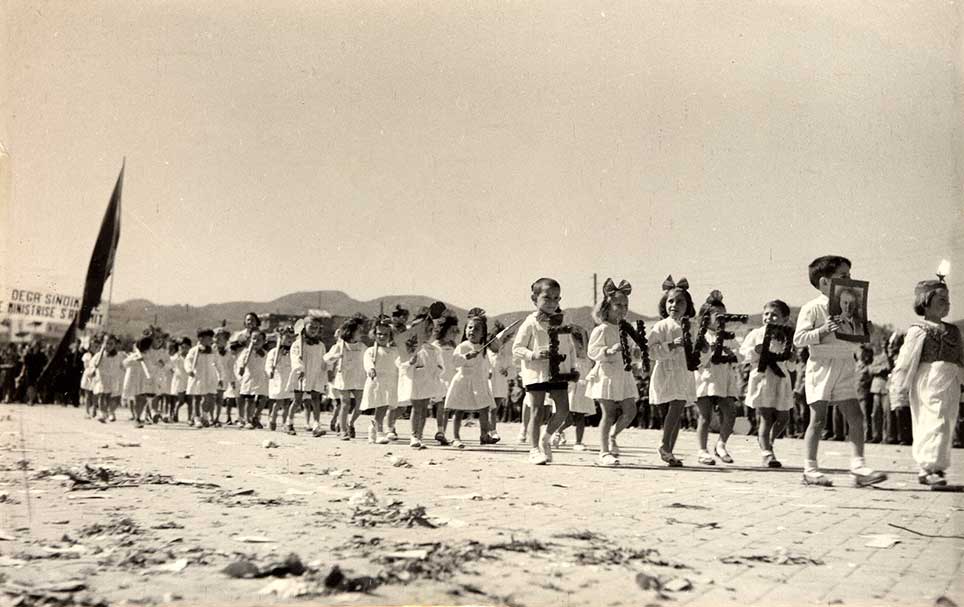
The communist regime that was installed immediately after the liberation was based on the dictatorship of the proletariat and the classes struggle. Like all regimes, he relied upon two pillars. The first one was propaganda, which was used to glorify the achievements of the regime, to justify his policies, and above all to raise the cult of the individual of the communist leaders, especially Enver Hoxha. The second pillar was the violence. It has been institutionalized by a set of laws that have violated any individual's rights and the system of prisons and concentration camps scattered throughout the country.
In 1945 were created some special courts to judge the collaborators of the invaders and the participants of the ‘reactionary’ organizations. Simultaneously a wide campaign was started to suppress all the opposing groups. The clerics trial of the so called “National Union”; the trial of the Democratic Union opposition party, like Gjergj Kokoshi and Musine Kokolari; the trial of the ex-students of the Technical School of Fultz, the trial of the deputies are some of the events that show the trend of the regime to suppress every political adversary. The campaign against religious beliefs and practices, launched in 1967, was evidence showing the need for extreme political and social uniformity of the regime.
The beginning was more violent to the political adversaries; later the process became frightening even for the some communist leaders. Different waves of arrestments and punishments were made as many times as the regime needed someone to blame for the failures of their economical policy, or to suffocate every dissidence signs in the country